Sending goods across USA or internationally is always a measure of risk from rough handling during transit to moisture, compression, or shifting inside the box. If you’re running an online store, shipping products for customers, or just mailing valuable or fragile items, you want a packaging partner you can trust. In this post, we’ll dive deep into mailing boxes in USA offers today, especially heavy‑duty and durable solutions, ways to choose, protect, and optimize your shipments, plus key tips and FAQs. The brand name buycustombox will appear just once here as an example of a custom box provider, but the focus remains on general guidance and market options.
1. Why Heavy‑Duty Mail Boxes Matter
A flimsy box can make or break the journey. The harsh truth is, many parcel damage claims arise from packaging failures not the carrier’s mishandling. Choosing robust, reliable mailing boxes ensures:
- Protection against compression & stacking: Packages are often stacked or squeezed; heavy-duty boxes resist crushing.
- Better resistance to tears, punctures, moisture: Strong corrugated flutes, thicker walls, better fiber strength help guard against environmental damage.
- Reduced claims and returns: Fewer broken items mean fewer costly replacements or refunds.
- Professional presentation: A sturdy parcel feels premium and gives customers confidence.
In USA varying climates cold winters, humid summers and long distances between cities, your packaging must stand up to extremes.
2. Key Specifications & Materials to Watch For
Before selecting a heavy-duty mailing box, here are the crucial technical factors to consider:
2.1 Corrugated Flutes & Ply
- Single-wall corrugated (e.g. C-flute, B-flute) is common for many shipments.
- Double-wall or triple-wall boxes (two or three layers of corrugated material) provide significantly more strength.
- The flute profile (size and shape of the corrugated “wavy” core) determines cushioning, stacking strength, and resistance to puncture.
2.2 Burst Strength, Edge Crush Test (ECT), and Box Strength Ratings
- Burst strength (bursting test) measures how much pressure from within the box causes rupture.
- ECT (Edge Crush Test) measures how much force the box edges can resist (important when boxes are stacked).
- Always review the supplier’s rated strength: for heavier or delicate items, target higher ECT or burst values.
2.3 Board Grade & Material Quality
- Use virgin kraft linerboards or high-quality recycled content with good fiber strength — cheaper makes often compromise durability.
- Moisture-resistant or coated boards help in damp or humid delivery environments (especially in rainy provinces or coastal regions).
- Consider wax-coated or water-resistant treatments for shipments going through wet or cold conditions.
2.4 Box Design: Regular Slotted, Half-Slotted, Telescopic, etc.
- Regular slotted containers (RSC) are the most common (all flaps same length).
- Half-slotted containers (HSC) are open top (good when using lids).
- Telescopic (top/bottom) provide adjustable height.
- For very heavy or odd-shaped items, custom engineered box styles may be necessary.
2.5 Inner Protection & Inserts
- Use foam inserts, molded pulp, bubble wrap, air pillows, honeycomb paper, corrugated partitions to secure the item inside.
- The goal: prevent movement and absorb shocks so the outer box does not bear all the impact.
3. Custom Mailing Boxes & Wholesale Options in USA
For businesses, especially eCommerce operations, relying solely on standard boxes often doesn’t suffice. You may want boxes tailored in size, print, and strength. Here are what the Canadian custom packaging market has to offer:
These providers allow you to specify internal dimensions, wall thickness, prints, coatings, inserts, and finishing touches all critical when shipping premium or fragile goods.
3.1 Using buycustombox as a Packaging Partner
buycustombox (brand name mentioned once here) is an example of a custom box manufacturer that can provide heavy-duty mailing boxes with custom branding, dimensions, and strength ratings. Working with such suppliers allows you to tailor your packaging strategy, maintain consistent branding, and ensure robustness.
5. Large Mailing Boxes: When You Need More Room
When your product is bulky or requires more internal clearance, “large mailing boxes” become a necessity. But they bring challenges:
- Larger boxes often face dimensional weight pricing (where shipping cost is based on volume rather than actual weight).
- They are more susceptible to compression and bending.
- Ensuring strong corners and reinforced edges becomes crucial.
5.1 Choose Structural Reinforcements
For large boxes:
- Using double-wall or triple-wall corrugated is highly recommended.
- Reinforce corners or edges with reinforced tape, corner protectors, or additional board.
- Consider internal partitions or bracing for heavy components.
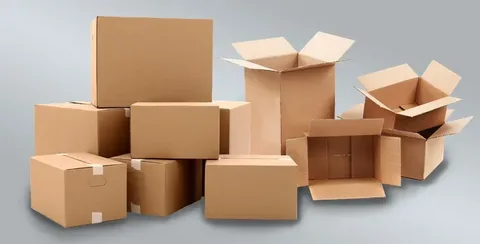
Custom Cardboard Boxes Wholesale
5.2 Confirm Carrier Limits & Pricing
- FedEx may treat large boxes as “oversize” if dimensions exceed standard thresholds, leading to higher rates.
- Always check dimensional limits and pricing tiers for large parcel services.
5.3 Matching Size & Weight Efficiently
- Rather than automatically going large, aim for minimal but sufficient box size to reduce shipping cost and material waste.
- Use custom boxes sized closely to your product’s footprint to minimize empty space and movement.
6. How to Reinforce & Protect Your Parcel
Even the toughest box can fail if not packed properly. Here are best practices:
6.1 Correct Packing Techniques
- Cushion all sides: Insert padding so that the item is suspended and doesn’t touch the box walls.
- Void fill: Use bubble wrap, air pillows, crumpled kraft paper, or foams to eliminate movement.
- Double-boxing fragile items: Place the item in a smaller box, then into a larger one with filler in between.
6.2 Tape & Sealing Methods
- Use water-activated kraft tape (gummed tape) or high-strength filament tape, rather than cheap pressure-sensitive tape.
- Use the H-taping method — seal all seams and edges with tape in an “H” pattern.
- Reinforce bottom seams, edges, and corners carefully.
6.3 Labeling & Protective Covers
- Attach labels on the top face; use clear poly sleeves to protect against moisture or abrasion.
- Include “Fragile,” “Handle with Care,” or “This Side Up” labels when needed — but don’t rely solely on them for better handling.
- Use corner protectors or plastic edge boards to shield corners from crushing.
6.4 Moisture Barriers & Desiccants
- In regions or seasons with high humidity or precipitation, include moisture-absorbing packets (silica gel).
- Consider an inner plastic bag (air/void bag) that wraps the product inside the box as a moisture barrier — but ensure it doesn’t cause condensation under temperature changes.
6.5 Cushioning & Inserts
- Use molded foam inserts, die-cut foam, thermoformed plastic, or molded pulp trays.
- Corrugated partitions or trays within the box help support multi-part items.
- Ensure that heavy or sharp parts are padded heavily (e.g., electronics, metal parts, glass).
7. Cost Considerations & Comparing Suppliers
Understanding packaging cost dynamics is essential to maintain margins while protecting items.
7.1 Cost Components to Watch
- Material & construction cost: More robust materials cost more.
- Customization & printing: Logos, graphics, special coatings increase cost.
- Die & tooling costs: Some providers have setup costs for unique box shapes.
- Shipping & freight to your location: Bulk box orders are bulky; freight can add significantly.
- Storage costs: Storage for large or bulk boxes in your warehouse.
7.2 Balancing Cost vs Protection
- Don’t overengineer every box match durability to item fragility and shipping conditions.
- Use more basic boxes for non-fragile or low-value items, and premium boxes for delicate, high-value ones.
- Sometimes buying a slightly heavier box is cheaper than replacing broken goods.
7.3 Negotiating and Volume Discounts
- Suppliers often offer significant discounts — e.g., 20–50% — when orders increase in volume.
- Consolidate ordering cycles to reduce frequent small orders and save on freight.
- Request waiver or discount on tooling/die costs for repeat orders.
7.4 Diversify Suppliers & Backup Options
- Avoid being reliant on a single box source. Disruptions (stockouts, supply chain delays) could harm your business.
- Maintain alternate suppliers — some focus on heavy-duty stock, others on custom printing or rapid turnaround.
8. Best Practices for Shipping & Labeling
Even after you have a strong box, your shipping process matters.
8.1 Understanding Carrier Requirements
- Carriers like FedEx, UPS or courier services will reject or surcharge parcels that don’t meet requirements (oversize, deform, unsafe packaging).
- Some systems measure parcels automatically and charge based on their measured size. (Several merchants report discrepancies between declared vs. scanned dimensions) Reddit
- Consider the dimensional weight rule (charge based on volume) — pack tightly and avoid excessive void space.
8.2 Accurate Weight and Measurement
- Use calibrated scales and measuring instruments.
- Round up measurements as carriers often charge based on their rounded dimension.
- Re-check after adding cushioning to avoid surprises.
8.3 Label Placement & Redundancy
- Use high-contrast, high-grade labels and avoid curved surfaces.
- If possible, include duplicate labels on two sides.
- Use tracking barcodes, customs labels (for cross-border), and bar code protection (clear film or sleeves).
8.4 Drop-off & Pick-up Considerations
- Drops at FedEX, UPS outlets, partner locations, or using courier systems must often meet certain package size and packaging standards.
- For bulk shipments, schedule courier pickups and ensure packaging is prepped and labeled before pickup.
8.5 Monitor Damage & Claims
- Take timestamped photos of parcels before drop-off to document condition (boxes, seals).
- Configure insurance or liability for higher-value products when possible.
- Keep logs of damage claims to feed back into packaging improvements.
9. FAQs: Mailing Boxes USA & Related Topics
Q1: Can I get custom mailing boxes in USA?
Yes. Many vendors offer custom dimensions, branding, printing, inserts, coatings, and structural design to suit your products.
Q2: How do I choose a suitable large mailing box for heavy or bulky products?
Go for double-wall or triple-wall corrugated shell, pick high ECT or burst strength ratings, reinforce corners and edges, design internal supports or partitions, minimize void space, and ensure you don’t trigger oversize rates.
Q3: What’s the cheapest shipping box in USA?
Using FedEX, UPS flat-rate boxes is often one of the most cost-effective options (up to 5 kg) since the cost is fixed regardless of destination. However, cheapest per‑unit boxes (like plain multipacks) plus negotiated parcel rates or courier agreements may be cheaper for bulk shipments beyond flat-box limits.
Q4: What happens if my shipping box gets measured differently by the carrier?
Carriers sometimes scan your parcel and measure it themselves. If the scanned dimensions or weight differ, you may incur additional surcharges (“dimensional weight charges”). Reddit Always account for tape, bulge, and padding when you measure your package to avoid underestimating.
10. Conclusion
If you’re shipping products in USA domestic or international — investing in heavy-duty mailing boxes is not optional; it’s foundational. Whether you’re shipping via FedEx, UPS flat-rate boxes or using custom-engineered parcels, you need to balance cost, strength, protection, and presentation.
- Start with strong structural design (flutes, walls, board quality).
- Use inner protection, correct sealing, and moisture safeguards.
- Leverage FedEx, UPS flat-rate boxes where feasible, but for custom or oversized items use reputable custom box manufacturers.
- Monitor packaging performance and claims to continuously improve designs.
By doing so, your parcels arrive safely, your customers experience satisfaction, and your business avoids costly damages. Robust, well-engineered boxes, responsible packing, and smart shipping practices are your best defense in the long run.